A simple solution to a leave request ended up costing an employer more than $34,000. This Employment Relations Authority case is a timely reminder that resignation is rarely the answer to leave management challenges.
When Strong Evidence Isn’t Enough

The Cost of Rushing a Disciplinary Process
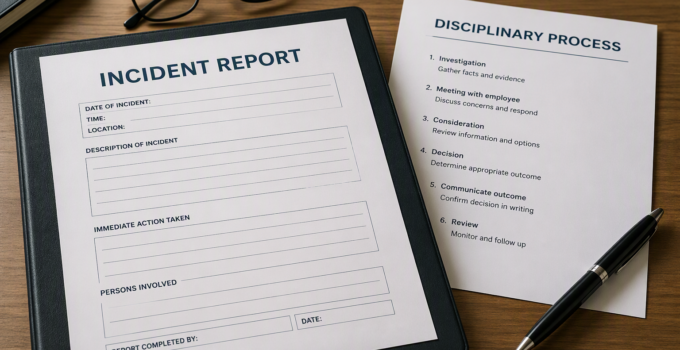
Many employers assume that if misconduct is obvious, the outcome will take care of itself. A recent Employment Relations Authority (ERA) decision serves as a timely reminder that even serious concerns about employee conduct do not excuse an employer from following a fair and reasonable process.
In Turner v Big B Cartage Ltd, a truck driver was dismissed for serious misconduct after sending an abusive and offensive text message to a colleague. The employer considered the message amounted to workplace bullying and decided to terminate the employee’s employment. The Authority later agreed that the employee’s conduct was blameworthy and had contributed to the situation that led to the dismissal.
However, that was not the end of the matter.
The Authority found that the employer had failed to carry out a fair disciplinary process. Before the disciplinary meeting, the employee had not been provided with adequate information regarding the allegations, had not been told the specific concerns that would be discussed, and had not been given the text message being relied upon as evidence.
The disciplinary meeting itself lasted only seven minutes. Following the meeting, the employer emailed the employee advising that his employment had been terminated for serious misconduct and requested the return of company property. While the employer later suggested the employee could provide information that might lead to the dismissal being “downgraded”, the Authority found that this was not a genuine opportunity to respond because the dismissal decision had already been made.
The Authority reiterated an important principle: a proper disciplinary investigation must be prompt but not rushed. Employees must be provided with relevant information, given a real opportunity to consider and respond to allegations, and employers must genuinely consider those explanations before making any final decision. The Authority specifically noted that while disciplinary investigations may be uncommon in small businesses, conducting them properly remains an essential management responsibility.
As a result, the dismissal was determined to be unjustified. The employee was awarded compensation for humiliation, loss of dignity and injury to feelings. Although the Authority reduced the award by 25% because of the employee’s own conduct, the employer was still ordered to pay $9,750.
Key Takeaway
This decision reinforces a message we often discuss with clients: having a valid reason for disciplinary action is only half of the equation. Employers must also ensure that the process is fair. Providing detailed allegations, sharing relevant evidence, allowing genuine time for a response, and keeping an open mind before reaching a decision remain critical safeguards. Ignoring these steps can turn what might otherwise have been a defensible dismissal into an unjustified one.
The February changes to the legislation state that if there is employee contribution then compensation and reinstatement are no longer remedies available to the employee. This has yet to be tested in the Employment Relations Authority and we don’t yet know how narrowly this will be interpreted. We anticipate personal grievances will change tack, and there will be unjustified disadvantage claims that will challenge the process rather than the outcome. Our advice is to ensure your process will pass scrutiny.
Related Posts